
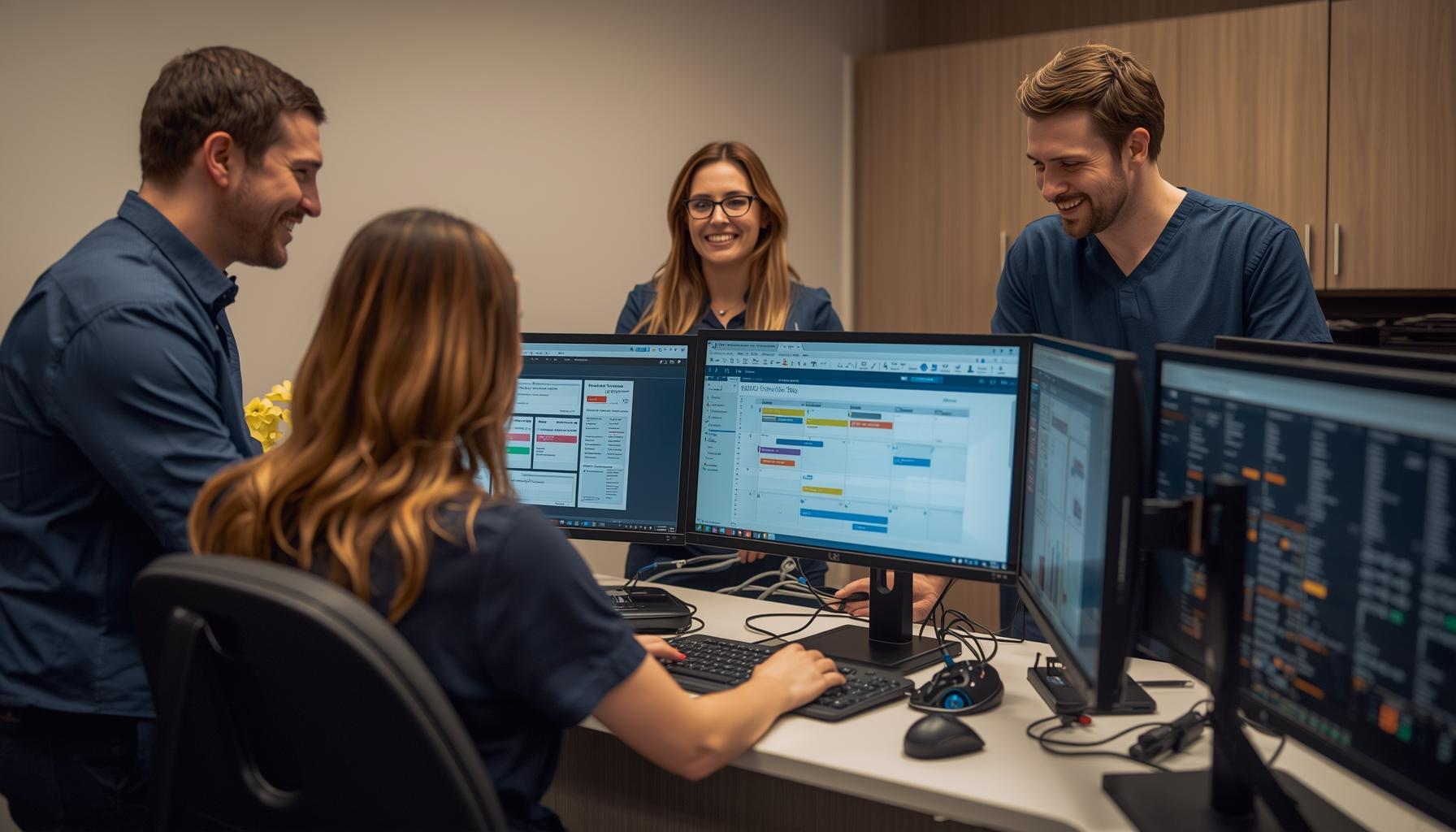
Your dental practice depends on far more than computers and Wi-Fi. Every day, your team relies on practice management software, digital imaging systems, Microsoft 365, cloud applications, and a secure network to schedule patients, document treatment, process insurance claims, and deliver quality care.
That's why choosing an IT provider with dental software expertise is so important.
A qualified dental IT provider should be able to support your entire technology ecosystem - not just troubleshoot Windows. They should understand leading dental platforms like Dentrix, Eaglesoft, Open Dental, Denticon, and Curve Dental, along with imaging systems such as Dexis, Carestream, Sidexis, and CBCT scanners. More importantly, they should know how these systems work together so your practice experiences less downtime, faster issue resolution, and fewer disruptions to patient care.
In this guide, we'll explain what your IT provider should support, why specialized dental experience matters, and the questions every practice should ask before choosing an MSP.
Why Dental Software Experience Matters
Most managed IT providers can support Microsoft Windows, email, and printers.
Very few understand how dental technology works together.
A modern dental practice depends on multiple interconnected systems, including:
- Practice management software
- Digital imaging
- Intraoral scanners
- CBCT systems
- Microsoft 365
- Secure Wi-Fi
- Cloud backups
- Patient communication platforms
- Insurance integrations
- HIPAA security controls
When one component fails, it often affects several others.
For example, a slow server can delay digital X-rays. A firewall issue can interrupt cloud imaging. A failed workstation can prevent scheduling or chart access.
An IT provider with dental experience understands these relationships and can resolve issues much faster than a general IT company.
Practice Management Software Every Dental IT Provider Should Support
Your practice management system is the heart of your office. If it's unavailable, patient care, scheduling, billing, and communication are all impacted.
Dentrix
Dentrix is one of the most widely used dental practice management platforms.
Your IT provider should understand how to support:
- Database connectivity
- Multi-workstation environments
- Server performance
- Remote access
- Backup and recovery
- Software upgrades
- Third-party integrations
Eaglesoft
Eaglesoft combines clinical workflows with practice management.
Common IT responsibilities include:
- Performance troubleshooting
- Imaging connectivity
- Workstation configuration
- Database maintenance
- Backup verification
- Vendor coordination
Open Dental
Open Dental is known for its flexibility and extensive integrations.
Your IT provider should be familiar with:
- SQL database performance
- Imaging integrations
- Cloud hosting options
- API integrations
- Multi-location deployments
Denticon
As a cloud-based practice management solution, Denticon shifts many responsibilities away from on-premises servers - but reliable internet, secure networking, user management, and endpoint protection remain critical.
Your IT provider should ensure the infrastructure supporting Denticon is secure, stable, and optimized for performance.
Curve Dental
Curve Dental offers cloud-based practice management with integrated imaging, scheduling, and billing.
Although server maintenance is reduced, practices still need expert support for:
- User management
- Microsoft 365 integration
- Device configuration
- Network performance
- Security
- Backup strategies for local data
Imaging Systems Require Specialized IT Knowledge
Dental imaging systems often demand significant storage, bandwidth, and reliable workstation performance.
Your IT provider should be comfortable supporting technologies such as:
- Dexis
- Carestream
- Sidexis
- Vatech
- CBCT imaging systems
- Intraoral scanners
- Digital sensors
These systems frequently integrate with practice management software, making coordinated troubleshooting essential. A knowledgeable IT provider can work directly with imaging vendors to identify whether an issue stems from hardware, software, networking, or system configuration.
Beyond Software: What Your IT Provider Should Manage
Supporting dental software is only one piece of the puzzle.
A comprehensive dental IT partner should also manage:
Microsoft 365
- Teams
- SharePoint
- OneDrive
- User accounts
- Licensing
Cybersecurity
Protecting patient information through:
- Multi-factor authentication
- Endpoint Detection & Response (EDR)
- Email security
- Security awareness training
- Continuous monitoring
HIPAA Compliance
Helping your practice implement administrative, physical, and technical safeguards that support the HIPAA Security Rule.
Backup & Disaster Recovery
Reliable, tested backups ensure patient records and business-critical systems can be restored after hardware failures, ransomware, or accidental data loss.
Vendor Management
One of the most valuable services a dental-focused IT provider offers is acting as your single point of contact.
Instead of your team coordinating between multiple vendors, your IT provider should communicate directly with:
- Dental software vendors
- Imaging vendors
- Internet providers
- Phone providers
- Hardware manufacturers
- Microsoft support
This eliminates finger-pointing and reduces downtime when issues arise.
Five Questions Every Dental Practice Should Ask Before Hiring an IT Provider
Before signing a managed IT agreement, ask these questions:
1. How many dental practices do you currently support?
Experience with healthcare workflows matters.
2. Which dental software platforms are you familiar with?
Look for experience with Dentrix, Eaglesoft, Open Dental, and the imaging systems your practice uses.
3. Will you coordinate directly with software and imaging vendors?
Your staff shouldn't have to manage technical conversations between multiple companies.
4. How do you help dental practices stay secure and support HIPAA compliance?
Cybersecurity and compliance should be built into your IT strategy - not treated as optional add-ons.
5. What are your guaranteed response times?
Technology issues can disrupt patient care and scheduling. Choose a provider that offers responsive support and clear service commitments.
Real Dental Practice Example
Associates in Periodontics, Implantology & Endodontics
For specialty dental practices, technology isn't just about keeping computers online - it's about ensuring the software and systems that support patient care work reliably every day.
That's why Dr. Chad Green values Torch Networks' specialized dental expertise.
"The biggest benefit of working with Torch Networks is the peace of mind. Their team is consistently responsive, knowledgeable, and proactive, which keeps our office running smoothly with minimal downtime."
He also highlighted what makes Torch Networks different from a typical IT provider:
"What sets them apart is their deep understanding of dental practices - from HIPAA compliance to the software we rely on every day - while still keeping our patient flow and operations top of mind."
When your IT partner understands both technology and the realities of a busy dental practice, your team can stay focused on delivering exceptional patient care instead of troubleshooting technical issues.
Frequently Asked Questions
Does every IT company support Dentrix?
No. While many IT providers can troubleshoot Windows and general networking, not all have experience with Dentrix, its database, integrations, and supporting infrastructure. Ask prospective providers about their experience with dental practice management software before making a decision.
What dental software should an IT provider support?
A dental-focused IT provider should have experience with leading practice management platforms such as Dentrix, Eaglesoft, Open Dental, Denticon, and Curve Dental, as well as imaging systems like Dexis, Carestream, Sidexis, and CBCT technologies.
Why is dental software expertise important?
Practice management and imaging platforms are central to scheduling, treatment planning, billing, and patient care. An IT provider familiar with these applications can resolve issues more efficiently and coordinate directly with software vendors, reducing downtime.
Should my IT provider communicate with software vendors?
Yes. Vendor management is one of the biggest advantages of working with a dental-focused MSP. Your IT provider should coordinate directly with software, imaging, internet, and hardware vendors so your staff isn't caught in the middle.
Can Torch Networks help with dental software upgrades and migrations?
Yes. Torch Networks helps dental practices plan and support software upgrades, infrastructure changes, vendor coordination, and technology migrations while minimizing disruption to patient care.
Partner with an IT Team That Understands Dentistry
Your practice deserves more than an IT company that simply fixes computers.
You need a technology partner that understands the software your team depends on, the compliance requirements you face, and the importance of keeping patient care running without interruption.
Torch Networks specializes in supporting dental practices with proactive managed IT, cybersecurity, HIPAA-focused guidance, and deep experience with the technology that powers modern dentistry.
If you're evaluating IT providers or looking for a team that truly understands dental technology, schedule a complimentary consultation with Torch Networks. We'll review your current environment, answer your questions, and help you determine whether your technology is supporting your practice - or holding it back.